
Sewing Machine for Jeans: Best Settings, Needle & Stitch Guide
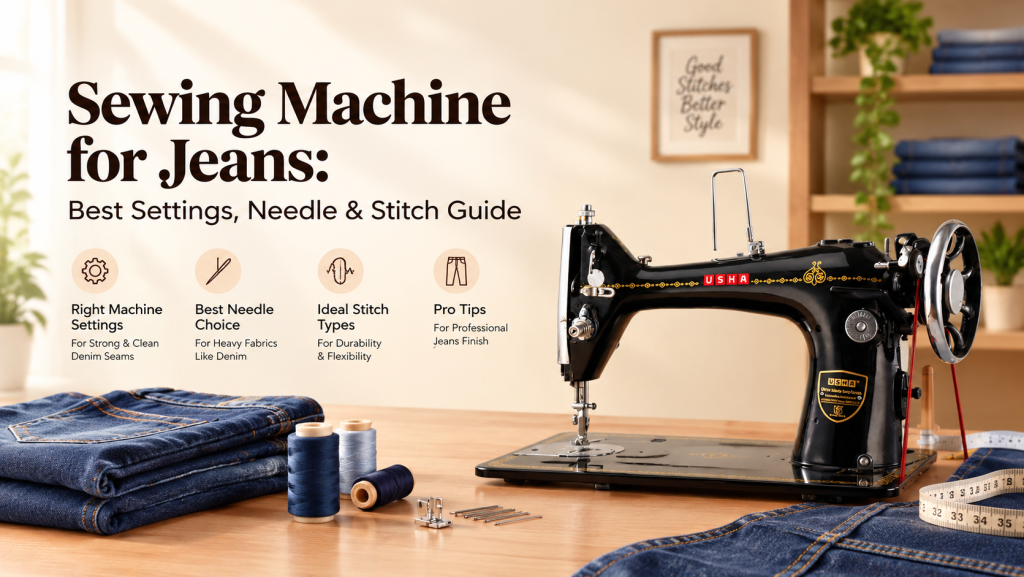
Sewing denim is a practical project you can easily complete at home. However, denim is a thick, tightly woven fabric, so it can be harder to sew than cotton and other lighter fabrics.
Making a sturdy pair of jeans requires durable materials, strong thread and the ideal technique for a neat finish. With the right needle and stitch length, you can sew through multiple layers of denim smoothly.
Usha Sew supports your denim sewing project with reliable sewing machines, suitable sewing machine accessories and practical guidance for stitching heavy fabrics. With the right tools and settings, you can turn this fabric into comfortable, durable trousers.
Can Jeans Be Stitched on a Regular Sewing Machine?
You can sew denim on a regular sewing machine, but you need to understand its limitations. Most basic machines work better with lighter fabrics, so thick denim may cause a few issues:
- Standard needles may bend or break when sewing through thick denim.
- Regular sewing thread may break under the pressure of heavy denim seams.
- Standard presser feet may struggle to move over thick, layered seams.
- The machine may skip stitches when the needle cannot pass through thick areas properly.
- The motor and feed dogs may struggle to handle and move heavy denim smoothly.
What to Look for in a Sewing Machine for Jeans
- Strong Motor: A powerful motor helps the needle sew through thick denim without slowing down or stopping.
- High Presser Foot Clearance: Extra space under the presser foot makes it easier to fit and sew thick denim layers.
- Heavy-Duty Feed Dogs: Strong feed dogs grip denim firmly and move thick seams through the machine evenly.
- Sturdy Internal Frame: A strong metal frame reduces vibration and keeps the needle properly aligned while sewing thick fabrics.
- Adjustable Presser Foot Pressure: Adjustable pressure helps prevent fabric bunching and ensures smooth movement over thick seams.
Best Sewing Machine Settings for Jeans & Denim
Best Needle Size for Denim
Denim needles have a strong shaft and sharp point that can easily pass through tightly woven denim. For medium to heavyweight denim, choose a 90/14, 100/16 or 110/18 jeans needle for maximum stability and penetration.
Thread Choice for Jeans Stitching
Denim needs strong thread to handle seam pressure and regular wear. Standard polyester thread works well for inner seams, while heavier polyester or cotton-wrapped thread suits outer seams and creates a neat topstitched finish.
Stitch Length & Tension Settings for Denim
A 3 mm to 4 mm stitch length works well for denim and helps prevent puckering. Slightly higher upper tension keeps the stitches even and balanced.
How to Sew Thick Denim Layers & Bulky Seams
- Trim the inner seam layers to different widths to reduce the thickness around the joined section.
- Press the seams open with steam, then use a wooden clapper or gently tap thick sections to flatten them.
- Place a clearance plate or folded cardboard under the presser foot to keep it level over raised seams.
- Turn the handwheel slowly over thick seams to maintain better control and reduce the risk of damaging the needle.
- Keep the garment supported on the sewing table so its weight does not pull against the needle.
How to Stitch Jeans Seams, Hems & Topstitching
- Stitch the inner leg and side seams with a strong straight stitch and standard sewing thread. Keep the seam allowance even throughout.
- Secure the raw edges with a zigzag stitch, overcasting foot or serger to prevent fraying after washing.
- Press the seams open or to one side using steam to create smooth, flat edges.
- Use heavy topstitching thread in the needle and regular all-purpose thread in the bobbin.
- Sew parallel to the seam edge with a 3 mm to 4 mm stitch length for neat, even topstitching.
- Fold the hem twice to cover the raw edges, press it firmly and stitch along the top edge with a level foot.
Recommended USHA Sewing Machine for Jeans: Rotary Stitch Master Pro
The USHA Rotary Stitch Master Pro is a durable straight-stitch machine designed to sew tough fabrics and multiple layers with ease.
- The special presser foot handles thick fabrics like denim and supports stitching through up to 16 layers.
- The rotary hook mechanism helps the thread move smoothly and reduces bobbin tangles.
- It creates fast, even and secure straight stitches for everyday garments.
- Its sturdy build supports reliable performance and long-term use.
When to Consider USHA Rotary Stitch Master
The USHA Rotary Stitch Master is an ideal choice for everyday sewing, heavy alterations and garment making. Its strong build and smooth rotary mechanism help create neat, even stitches, even on thicker fabrics.
Common Mistakes to Avoid When Sewing Jeans
- Using a regular needle instead of a strong needle made for denim.
- Sewing quickly over thick seams instead of turning the handwheel slowly.
- Using a stitch length that is too short for thick denim.
- Using thick thread in both the needle and bobbin instead of using regular thread in the bobbin.
- Not testing the thread tension and stitch length on a denim scrap first.
- Pulling or pushing the fabric instead of letting the machine feed it naturally.
Conclusion
Sewing denim becomes easy with the right needle, thread and machine settings. A reliable jeans stitching machine helps you make durable trousers and simple alterations at home. To explore suitable USHA Industrial Sewing Machines , parts and accessories , find a USHA Sew store near you .
You can also contact Usha Customer Service via WhatsApp at 8595108742 or call the Usha Call Center at 1800-1033-111 for any assistance or queries.
Frequently Asked Questions
Should denim be pre-washed before stitching?
Yes, pre-washing denim removes excess sizing and allows the fabric to shrink before you cut and stitch the garment.
How often should I change a denim needle?
Change the denim needle after one jeans project or about eight hours of sewing. Thick denim can dull needles quickly.
Can I alter or shorten ready-made jeans with a sewing machine?
Yes, you can alter ready-made jeans with a household jeans-making machine. Measure, trim, press and stitch the new hem.
How should I press thick denim seams after stitching?
Use high heat, steam and a pressing cloth to flatten denim seams. A wooden clapper can help flatten thick areas.
Should raw denim edges be finished before the first wash?
Yes, finish raw denim edges before washing to reduce fraying and prevent edge damage. Use a zigzag or overlocking stitch.

