Learn Sewing at Home: Complete Tailoring Guide for Beginners
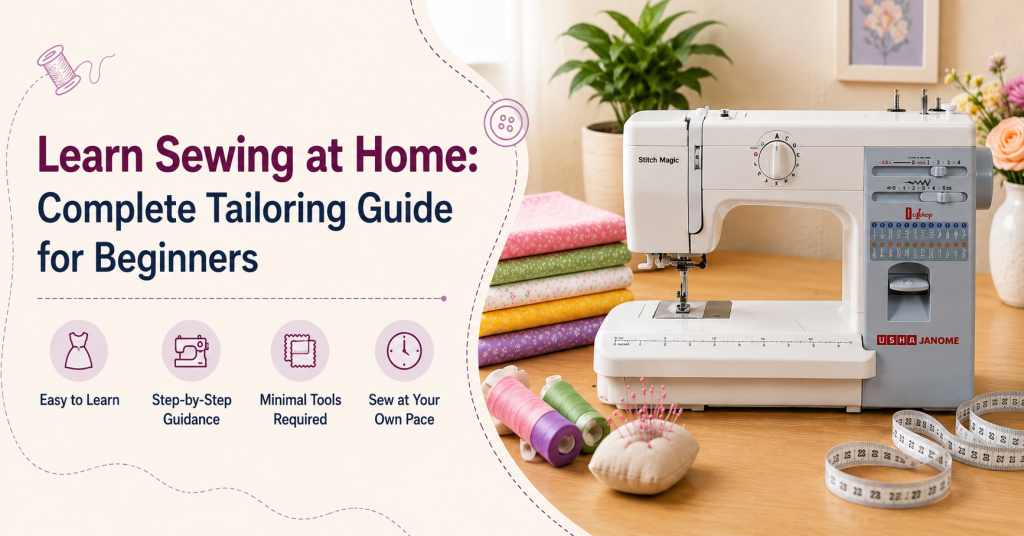
Learning tailoring has become more accessible than ever. With the right guidance, practice, and structured lessons, beginners can develop essential sewing skills from the comfort of their homes.
Whether you want to stitch everyday garments, make simple alterations, or explore sewing as a hobby, understanding the basics is the first step. At USHA Sew, we provide comprehensive tailoring notes that save you from purchasing expensive study materials.
This guide covers the fundamentals of tailoring, from essential tools and techniques to beginner-friendly sewing tips, helping you build a strong foundation.
Why Learn Tailoring at Home?
Tailoring is one of the most useful skills that you can learn. Besides helping you create perfectly fitted garments, it also opens opportunities to earn from home, customise clothing, and reduce alteration costs.
As compared to classroom training, home-based learning lets you practice whenever you have time and work at your own pace. Using project-based learning with a structured home tailoring course book is easier, more enjoyable, and appropriate.
Learning tailoring at home enables you to:
- Develop a valuable skill for life
- Avoid the expense of altering/customising your clothes.
- Make your own clothes and gadgets for yourself and your family.
- Prepare for tailoring certification exams
- Start an at-home tailoring job.
- Learn through practical sewing projects.
Create Your Own Tailoring Notebook to Get Started
Learning tailoring involves understanding a range of techniques, measurements, and sewing methods. Keeping all your notes and practice records in one place makes it easier to revisit important concepts as your skills improve.
A tailoring notebook helps you organise your learning and track your progress throughout the course. Here is the breakdown of sections to include and review after each lesson.
| Section | Purpose |
|---|---|
| Body Measurements | Record size charts |
| Sewing Tools | List essential tools and accessories |
| Practice Drawing Exercises | Pattern Drafting |
| Stitch Samples | Record stitch settings and samples |
| Project Notes | Track completed projects |
| Alteration Tips | Note common fitting corrections |
Downloadable Learning Sheets
- Printable tailoring notebook template
- Measurement sheets
- Pattern drafting worksheets
- Cutting practice pages for garments
- Sewing practice checklist
These printable resources will support your tailoring course book and maximise your learning experience. You can also download complete Sewing Course Material at Usha Sew.
8-Week Beginner Course Plan
Learning tailoring becomes easier when you follow a structured plan that builds your skills step by step. A consistent schedule allows you to practise each technique, gain confidence, and develop a strong foundation before moving on to more advanced projects.
| Week | Skill Focus | Practice Project Example |
|---|---|---|
| Week 1 | Machine Basics and Safety | Straight Stitch Samples |
| Week 2 | Measurements and Fabric Knowledge | Measurement Chart |
| Week 3 | Pattern Drafting | Handkerchief |
| Week 4 | Fabric Cutting | Cushion Cover |
| Week 5 | Necklines and Sleeves | Practice Blouse Panel |
| Week 6 | Basic Garment Construction | Simple Kurta |
| Week 7 | Finishing and Alterations | Pajama or Salwar |
| Week 8 | Complete Sewing Project | Beginner Kurti |
For more details, you can download our Sewing Lesson Tutorials for a range of garments in your preferred language.
Your First Practice Project: Step-by-Step Guide to Stitch a Cushion Cover
All successful tailors begin with a simple project. Begin with a simple cushion cover or tote bag to try out cutting and tailoring skills before engaging with complex sewing projects.
- Measure the fabric carefully and mark it for accuracy.
- Use tailor’s chalk to draw a cutting line.
- Trim the fabric, keeping the seam allowance even.
- Stitch slowly using straight stitches.
- Cut any loose ends and tie off tightly around the edges.
- Press the finished project for a professional, neat look.
Download the complete Usha Sewing Course PDF to get started!
Essential Tools and the Right Usha Machine to Start With
The key to learning is the right sewing machine.
Start With: Usha Straight-Stitch Machine
A straight-stitch sewing machine is an excellent choice for beginners looking to build a strong foundation. It allows you to practise essential techniques such as straight stitching, seam allowances, hemming, and fabric control while working on simple projects and practice exercises.
USHA offers beginner-friendly straight-stitch sewing machines that are easy to operate, durable, and suitable for everyday tailoring needs, helping new learners develop confidence with every stitch. It is recommended for beginners to learn:
- Straight stitching
- Seam allowance
- Basic hemming
- Fabric control
- Practice exercises
Next Skill Stage: Usha Zig-Zag Machine
As your tailoring skills grow, you may want to explore a sewing machine with additional stitch options. USHA zig-zag sewing machines enable you to work with stretch fabrics, create decorative stitches, sew buttonholes, finish raw edges, and take on more advanced garment construction projects.
With multiple stitch patterns and greater versatility, it supports a wider range of sewing techniques for learners looking to expand their creativity. Here is what you can use it for:
- Decorative stitches
- Stretch fabrics
- Buttonholes
- Edge finishing
- Advanced garment construction
Ready to begin? Explore the complete range of USHA sewing machines and choose the right machine for your tailoring journey today!
Build Your Tailoring Skills & Grow with Confidence
Once you have learned the basics, you can upgrade your skills and turn tailoring into a source of income. Begin with easy tasks such as blouse stitching, altering, kurti making, or making kids’ wear, and practice more regularly to build up expertise.
To take the next step in your sewing journey, explore the structured courses, tutorials, and learning resources available on USHA Sew. With step-by-step guidance, you can continue building your tailoring skills at your own pace and work towards more advanced sewing projects.
Frequently Asked Questions
How can I learn tailoring at home for free?
Use structured sewing lessons, downloadable lesson notes, practice worksheets, and easy project videos available at Usha Sew. Learning on a planned schedule helps you build skills more efficiently.
What should be included in a tailoring notebook?
A tailoring notebook must contain the following: Measurements, notes on fabric, drafting exercises, stitch samples, project records, alteration methods, and costings.
Is there a free tailoring course book available in India?
Yes. For beginners, USHA Sew provides pocket-friendly, downloadable PDF tutorials, sewing lesson notes, project worksheets and digital learning material to support home-based tailoring sessions.
What is the basic syllabus for a home tailoring course?
In a beginner-level syllabus, USHA Sew demonstrates fabric, pattern drafting, fabric measurements, cutting, stitching, garment construction, finishing, and basic alterations.
How long does it take to learn basic tailoring?
Most students become well qualified to sew within 6 to 8 weeks with weekly practice. Practice builds speed, accuracy, and garment finishing, and prepares learners for further tailored tasks.